
Landslip Risk in Remote Landfills: Lessons from Norfolk Island Waste Management Centre
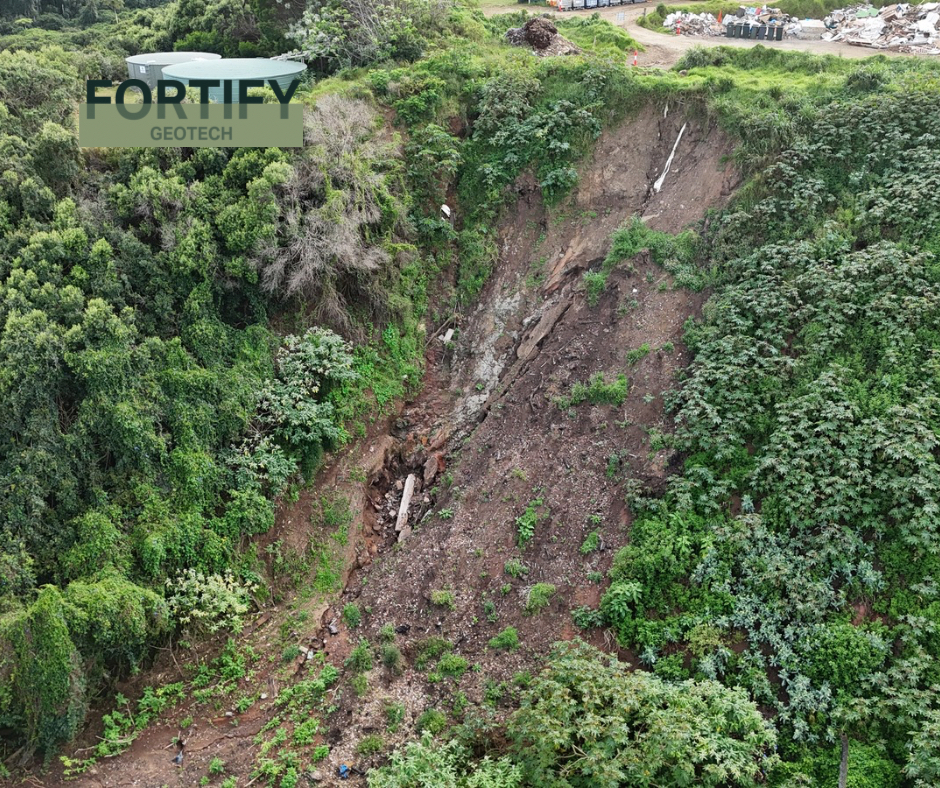
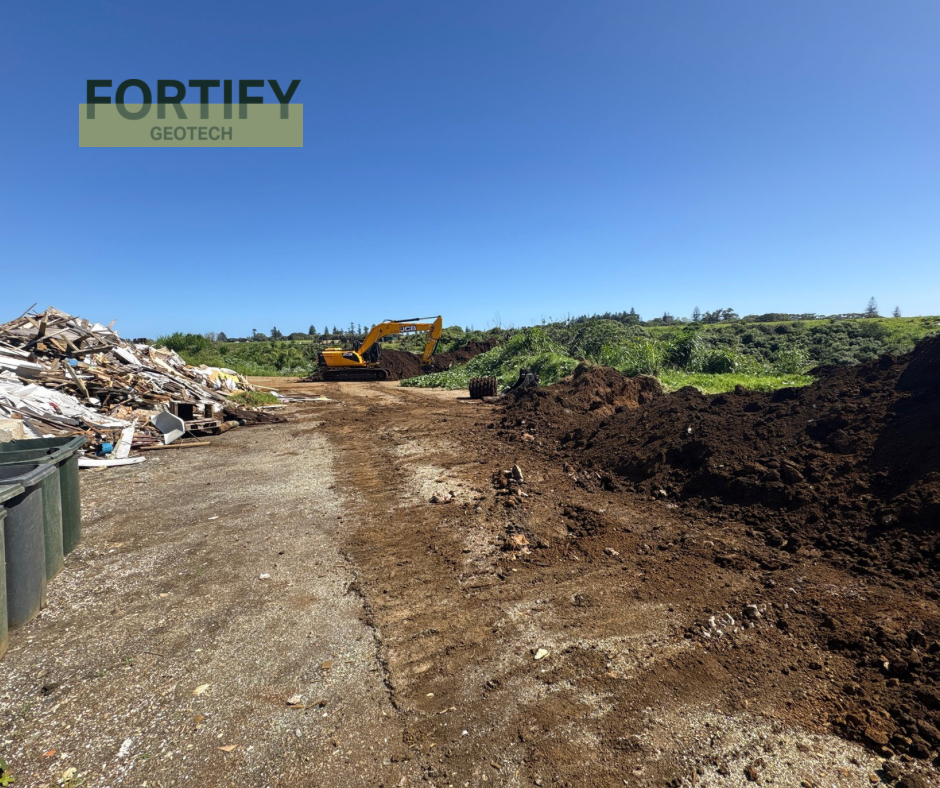
Landslips in landfill environments present a unique and often underestimated engineering challenge—particularly in remote locations such as Norfolk Island. The Norfolk Island Waste Management Centre has previously experienced landslip events, most likely triggered by a combination of heavy rainfall and inadequate drainage. These conditions highlight the critical importance of tailored geotechnical solutions that consider both material behaviour and logistical constraints.
Why Landfill Slopes Behave Differently
Unlike natural soil or rock slopes, landfill slopes are composed of municipal solid waste (MSW)—a highly heterogeneous material. This variability introduces several engineering complexities:
-
Unpredictable compressibility
-
Variable shear strength over time
-
Non-uniform settlement patterns
-
Changing mechanical properties due to decomposition
Because of these factors, traditional slope stability assumptions often fall short when applied to landfill environments. Engineers must instead adopt adaptive, site-specific approaches that account for evolving ground conditions.
Key Causes of Landslips in Landfills
At Norfolk Island, the primary contributors to slope instability include:
-
Heavy rainfall infiltration
-
Poor surface and subsurface drainage
-
Increased pore water pressure within the waste mass
-
Progressive weakening of materials over time
These factors combine to reduce slope stability, increasing the likelihood of failure—particularly in areas where drainage systems are insufficient or poorly maintained.
Engineering Constraints in Remote Locations
One of the most significant challenges in addressing landslip risk on Norfolk Island is its remoteness. While advanced solutions such as geogrids and other geosynthetics are commonly used to reinforce slopes by increasing shear strength and reducing deformation, they are often impractical in isolated locations due to:
-
High transportation costs
-
Limited availability of materials
-
Logistical delays
-
Installation complexity requiring specialised labour
As a result, remediation strategies must prioritise practicality, reliability, and local feasibility.
Practical Remediation Strategies for Landfill Stability
For remote landfill sites like Norfolk Island, a more viable and effective approach involves a combination of the following:
1. Slope Geometry Modification
Reprofiling slopes to reduce steepness can significantly improve stability by lowering driving forces and redistributing stress within the waste mass.
2. Improved Drainage Systems
Effective drainage is critical to controlling pore water pressure:
-
Surface drainage to divert runoff away from slopes
-
Subsurface drainage to remove infiltrated water
3. Erosion Control Through Vegetation
Vegetation plays a dual role:
-
Stabilising surface soils through root reinforcement
-
Reducing erosion caused by rainfall and runoff
4. Ongoing Monitoring and Maintenance
Regular monitoring allows for early detection of movement or instability, enabling proactive intervention before failure occurs.
The Role of Sustainable and Nature-Based Solutions
As landfill sites expand and infrastructure increasingly encroaches on these areas, engineers must consider how to improve landfill performance for long-term use.
Recent research presented at the 2025 Australian Geomechanics Society (AGS) Symposium highlights emerging approaches:
-
Bhandari et al. (2025) explore how stabilised landfill waste responds to cyclic loading, offering insights into its potential for sustainable subgrade applications.
-
Mickovski (2025) advocates for nature-based solutions, demonstrating how living plants can be effectively integrated into construction materials to mitigate shallow landslips and coastal erosion.
These studies reinforce the importance of combining engineering principles with sustainable practices to create resilient, future-ready landfill systems.
Landslip management in landfill environments—particularly in remote locations like Norfolk Island—requires a careful balance between technical effectiveness and practical implementation. While advanced reinforcement methods may not always be feasible, a well-designed strategy incorporating slope modification, drainage, vegetation, and monitoring can deliver reliable and sustainable outcomes.
As the industry evolves, integrating nature-based solutions and innovative research will be key to improving landfill stability and making better use of these increasingly valuable land resources.